Why I love situational leadership
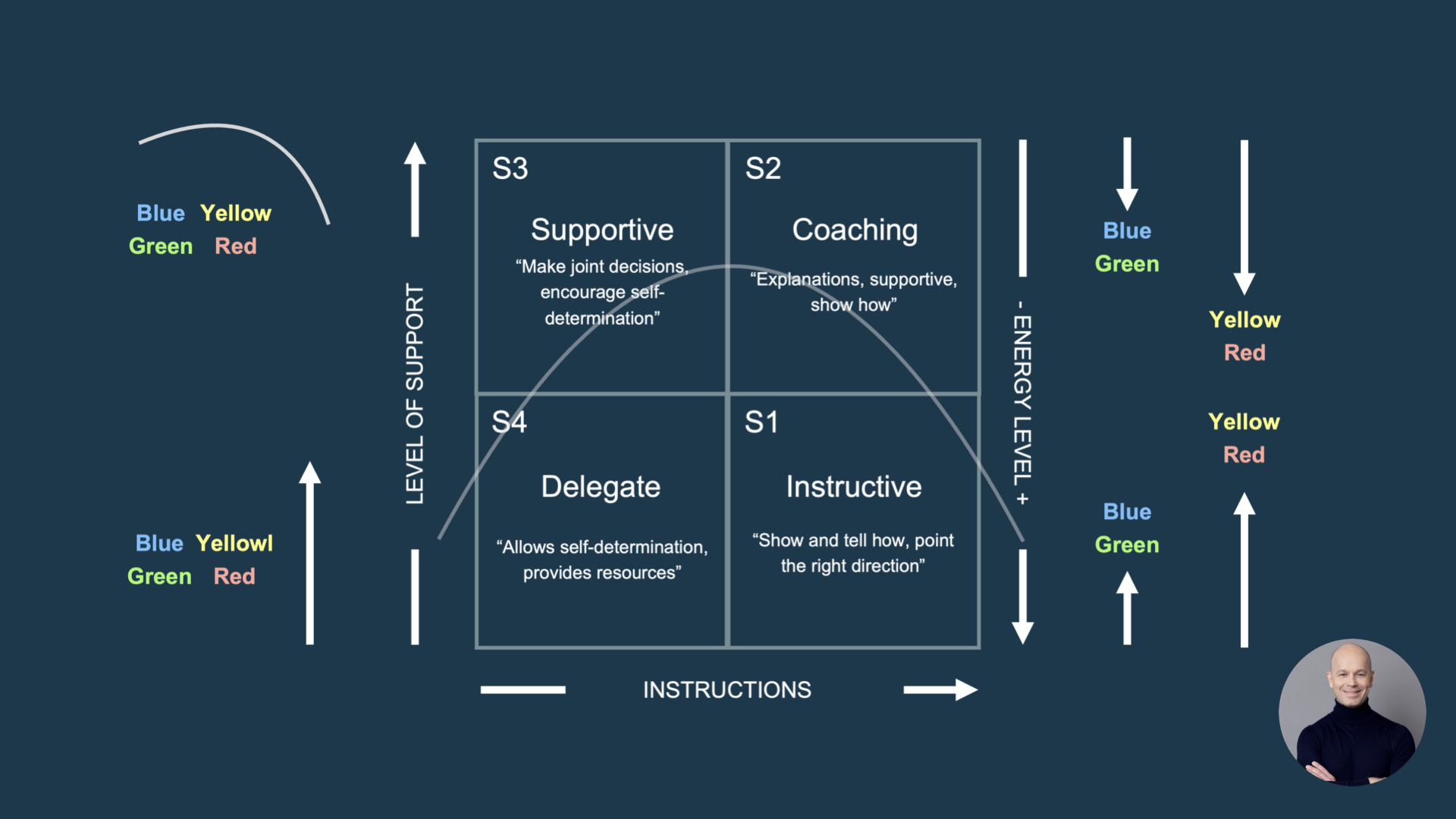
SLII (Situational Leadership II) is one of the world's most widely used and validated leadership frameworks, invented by Ken Blanchard in the 1960’s.
My love affair with Situational Leadership II (SLII) began over two decades ago, when I was in my early thirties, stepping into the high-pressure role of sales director at a media company. I had the raw drive of youth and a knack for closing deals, but leading a team through shifting market demands felt chaotic. That changed when I met a former military officer who became my mentor – a no-nonsense veteran who introduced me to SLII during one of our late-night strategy sessions. He didn't just teach theory; he showed me how to diagnose team readiness and adapt my style on the fly, turning frantic sales reps into a cohesive revenue machine. What started as a survival tool in media sales floors evolved into the backbone of my CEO years, police leadership programs, and now my nomadic one-on-one mentoring. SLII's power lies in its realism: leadership isn't a fixed personality trait but a flexible response to the situation at hand.
The Early Days: SLII as My Sales Lifeline in Media Chaos
Back then, as a newly minted sales director, I inherited a team of veterans who knew media ad sales inside out but were demoralized by digital disruption. Deadlines loomed, quotas slipped, and my instinct was to bark orders – until my military mentor pulled me aside. "Diagnose first," he said, walking me through SLII's four development levels and matching styles. Those high-skill but low-confidence reps (Development Level 3) weren't defiant; they needed support – active listening, praise for past wins, and shared problem-solving. We shifted from directive mandates to collaborative huddles, and within months, the team not only hit targets but owned the process. Revenue stabilized, turnover dropped, and I realized SLII wasn't about control; it was about empowerment through adaptation. That foundation carried me from media boardrooms to CEO decisions, proving its scalability across industries.
What Makes SLII Uniquely Powerful: Flexibility Without Complexity
SLII demystifies leadership by boiling it down to a clear matrix: four styles tailored to four development levels, based on competence and commitment for any given task. When someone's new and unmotivated (D1), you direct with specific guidance and supervision, just as I did onboarding fresh sales reps amid tight deadlines. As skills build but enthusiasm dips (D2), coaching kicks in – blending direction with encouragement to foster buy-in, a staple in my early team turnarounds. For skilled performers wrestling with confidence (D3), supporting takes over: facilitating, praising, and removing roadblocks, which became my go-to for veteran media execs navigating industry shifts. And for self-starters at D4, delegating provides autonomy with light oversight, freeing energy for bigger plays.
This isn't rigid dogma; it's a dynamic loop, recognizing that development fluctuates. In group settings like my SLII certification for 30+ police managers, we dissected real crises – directing tactical responses for rookies, coaching ethical gray areas for mid-level officers, and supporting strategic vision for captains. Sales teams at AdOn Media used it similarly, flexing styles per rep to revive pipelines. I cherish SLII's elegance: observable cues guide precise actions, no psychometrics overload required.
Proven Transformations: From Police Pressures to Tech Transitions
Fast-forward to recent years: Swedish Police Authority, where battle-tested leaders clung to command-and-control amid public scrutiny and hybrid operations. Through SLII immersion, they embraced flexibility – directing protocols for novices, coaching sergeants on resilience, supporting captains in team-building. Feedback poured in: flexibility scores rose 40%, with comments like "I now facilitate ownership instead of dictating – results follow naturally." Sigma Technology Group's tech leads faced parallel chaos in remote work; S3 support unlocked innovation, preventing burnout while accelerating projects.
In mentoring, SLII's intimacy shines. A downsized media exec at D2 for pivots gained momentum through tailored coaching, reaching D4 independence swiftly. "You taught me to match the moment," she said. These stories echo my military mentor's lessons – SLII delivers because it's battle-tested, from sales floors to front lines.
Avoiding the Traps: Why Leaders Misfire (And SLII Corrects)
Too many default to "hero directing" for D4 stars or passive support for D1 beginners. SLII insists on diagnosis first, looping as needs shift. Common pitfalls dissolve: over-control erodes trust, under-guidance breeds confusion. My mentor drilled this in media sales; it saved my skin then, saves teams now.
Your SLII Quickstart: Three Practical Steps Forward
To embed this, begin with one team member: assess their competence and commitment on a priority task, align your style, and note the impact. Next, journal daily: "How did S3 support shift today's dynamic?" Finally, turn it inward for self-leadership, adapting to your rhythms. Workshop participants see shifts in a week; you will too.
Mastering Moments: SLII's Enduring Gift
From that military mentor's wisdom at 30-something to coaching CEO’s and senior executives, SLII remains my absolute favorite together with FIRO for Teams because it honors human variability. Lead the situation, not the stereotype – and watch performance and results soar.
Book a free discovery call to map your own SLII status, and to learn if SLII is something useful for your Management Team.
