Motivation vs. disciplin
In my early thirties as a sales director in the cutthroat media industry, I often faced teams brimming with talent yet paralyzed by fleeting motivation – reps who crushed pitches on good days but vanished into procrastination when the fire dimmed.
That's when I wove motivation and discipline into my leadership toolkit, drawing from DISC profiles, SLII adaptability, SMART goals, and mental training taught in my Leadership and Sales Courses. These aren't fluffy concepts; they're the engine turning inconsistent performers into reliable overachievers, and now my shift from caravan to backpacking across Europe in May.
What I've learned is that motivation provides the spark you need to get going, while discipline fans the flame – mastering both requires diagnosing your unique wiring and building systems that endure beyond your mood swings.
The Media Sales Wake-Up: When Motivation Alone Crumbled
Picture Q4 crunch time: ad revenue targets looming, digital rivals encroaching, and my team oscillating between euphoric wins and total stalls. I initially leaned on pep talks and top incentives, chasing that dopamine rush of motivation, but results sputtered as enthusiasm faded.
A pivotal team debrief revealed the truth – these weren't lazy reps but mismatched drivers, some needing social accountability (I-types in DISC), others craving data-backed routines (C-types). Integrating SLII self-diagnosis with DISC unlocked it: we shifted from generic "get motivated" rallies to tailored discipline doers, like short sprints for D-types and ritual checklists for S-types.
Pipeline velocity increased and I realized motivation without discipline is like a sports car without brakes – thrilling but unsustainable. This foundation powered my coming CEO years and today it’s the core of every mentoring session I host.
Unpacking the Duo: Why Motivation Fades and Discipline Endures
Motivation thrives on emotion – the high of a closed deal or visionary pitch – but biology betrays it: stress, sleep, or setbacks drain the tank. Discipline, conversely, is the habituated response, the choice to act when feelings falter, much like my military-inspired routines from early SLII training.
Science from habit experts like James Clear supports this: motivation fuels starts, discipline ensures finishes. In my courses, we bridge them via DISC to personalize: D-types ignite on challenges, I-types on collaboration, S-types on stability, C-types on precision metrics. Without this nuance, leaders default to one-size-fits-all pep, breeding burnout; with it, teams compound gains.
SLII elevates the interplay – adapt your self-style to your state: direct low-motivation mornings (S1), coach through slumps (S2), support confidence dips (S3), delegate in flow (S4). Paired with SMART goals – specific, measurable, achievable, relevant, time-bound – it cements your own and your Teams discipline.
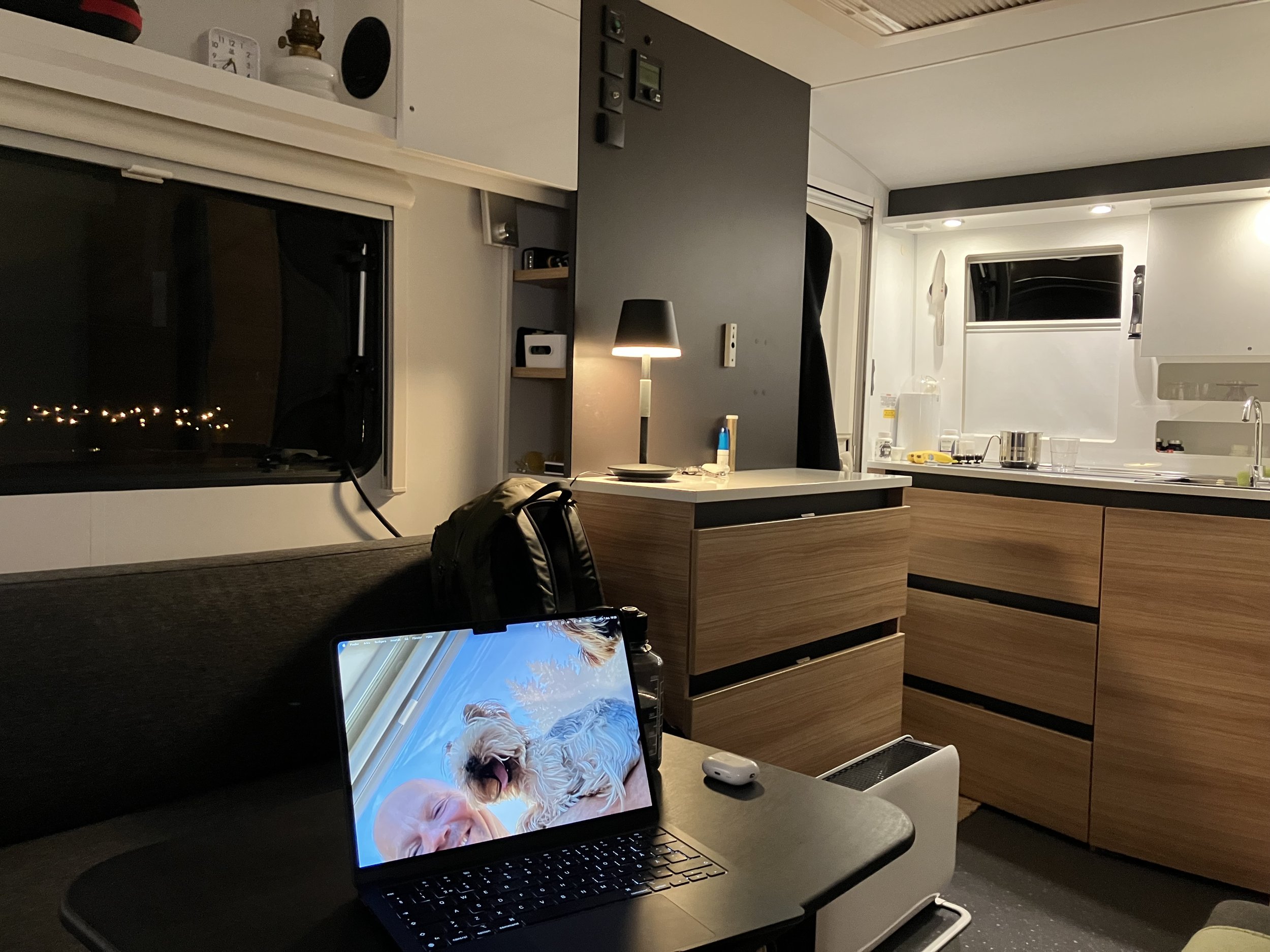
Nightfall in December.
Easy to miss: Chasing Fire Without Forge
Common traps abound: over-relying on external motivators (like bonuses, champagne) or rigid discipline ignoring DISC-variance. My media teams taught me – ignore personality, and systems fail. The fix: weekly audits blending SLII states with SMART tracking, preventing motivational crashes.
My 7-Day Challenge to you: Build the Duo Now
Start with a hour DISC self-scan to ID your drivers, then SLII-journal your morning state and adapt. Stack micro-disciplines (coffee + two-minute goal set), visualize daily, and craft one SMART action daily/weekly.
From media sales hustles to backpack horizons, motivation sparks, discipline endures – fuse your Leadership or Sales performance via DISC, SLII, and SMART – you will be unstoppable.
Book a discovery call – I will help you turn that slippery and hard to catch fire into your methodical forge for success.
